By Stephanie Robey
Helping Wisconsin Businesses Grow and Innovate: October event highlights impact
Across Wisconsin, the Universities of Wisconsin’s Office of Business & Entrepreneurship (OBE) is helping entrepreneurs turn ideas into opportunities, strengthen their businesses, and bring new technologies to market. Through specialized programs, expert consulting, and connections to funding and industry expertise, OBE provides practical support that helps businesses overcome challenges, pursue growth, and contribute to the state’s economy.
These impacts were on display at a recent OBE event in Brookfield, where Wisconsin business leaders shared how university resources, many of which are available at no cost, helped them navigate critical stages of business development.
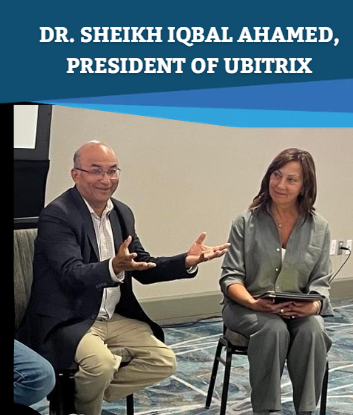
One panel at the event, featuring Natasha Broxton, President of Select Auto Parts & Sales in Milwaukee; Juro Kusnir, Co-owner of Alaska Fresh Seafood in Butler; and Dr. Sheikh Iqbal Ahamed, President of Ubitrix, demonstrated how the Universities of Wisconsin’s OBE translates expertise into real-world business results. Through OBE, the umbrella group which houses the Food Finance Institute (FFI), the Center for Technology Commercialization (CTC), and the Wisconsin Small Business Development Center (SBDC) Network, entrepreneurs can access the guidance, technical assistance, and resources they need to move forward, extending university expertise beyond campus and into communities across Wisconsin.
Preparing entrepreneurs to secure capital and grow
For Broxton, OBE’s Capital Readiness Program (CRP) provided valuable support as she prepared to pursue financing. The program helps women entrepreneurs become investment-ready through financial training, an in-depth assessment of business finances, mentorship, and a pitch event that connects participants with lenders and investors aligned with their needs.
Broxton also worked with Wendy Potratz, Financial Consultant at OBE, who helped strengthen her accounting and bookkeeping processes. This hands-on guidance gave Broxton a stronger financial foundation and better tools for managing her business.
Her experience illustrates how the OBE helps entrepreneurs build the capabilities behind sustainable growth through both connection to resources and equipping them to make informed decisions and pursue financing with greater confidence.

Turning business challenges into growth opportunities

For Kusnir, consulting through the SBDC at UW-Milwaukee helped him develop a functional business plan and move Alaska Fresh Seafood forward. He credited Greg Martin, Center Director at the SBDC at UW-Milwaukee, with providing guidance that strengthened his approach to planning and business growth. In calendar year 2025, the SBDC network helped clients acquire $136 million in capital investment.
Kusnir also participated, and was a finalist, in FFI’s Naturally Wisconsin Pitch Slam, which opened the door to then taking Raising Equity training with Tera Johnson and participating in the FFI Fellows Program cohort. Cumulatively, through 2025, the Fellows Program has had an impact of $127.2 million in total annual sales. Kusnir highlighted FFI’s deep expertise and credibility in the food and agriculture industry as particularly valuable to his business.
Colleen Merrill, Strategic Projects Director at OBE and moderator of the panel, said, “Kusnir’s experience illustrates how entrepreneurs can build on one resource or program and connect with additional expertise as their businesses evolve.”
Advancing innovation from research to the marketplace
Another OBE group, the Center for Technology Commercialization (CTC), helps entrepreneurs bridge the gap between developing a promising technology and bringing it to market. Through CTC, innovators can access technical guidance and support in pursuing competitive funding that helps move new ideas closer to commercialization.
Ahamed’s work with Todd Strother, Senior Technology Consultant with CTC, demonstrates this impact. With CTC’s support, Ahamed secured funding totaling over $2 million through the federal Small Business Innovation Research/Small Business Technology Transfer (SBIR/STTR) programs. Ahamed continues to work with the CTC team as he develops technology focused on AI guardrails for technical and procedural safety.
By helping innovators navigate funding opportunities and commercialization pathways, OBE helps turn technological potential into solutions with real-world applications. Since 2010, CTC clients have received approximately $172 million in SBIR funding, demonstrating the group’s support for individual entrepreneurs and enhancement of Wisconsin’s broader innovation ecosystem.
Developing entrepreneurial talent for start-up businesses
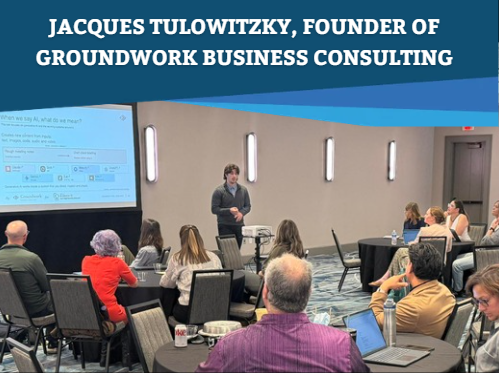
Another session at the Brookfield event featured Jacques Tulowitzky, Founder of Groundwork Business Consulting, and demonstrated how working with OBE led to launching his own business.
Jacques worked as a student consultant with OBE’s Small Business AI Center (SBAIC), a no-cost resource that helps Wisconsin small businesses explore and apply AI. His experience demonstrates how university resources can help cultivate innovation and entrepreneurship at multiple stages—from student engagement and skill development to business ownership.
Jacques shared insights on how his own business assists other small businesses. His presentation highlighted how entrepreneurs can approach AI strategically to improve efficiency, strengthen decision-making, and explore new opportunities through use of various AI models, harnesses, orchestrations, and agents.
University expertise, Wisconsin impact
The experiences shared at the event highlight the breadth of the Universities of Wisconsin’s OBE units and their impact across the state. Through financial readiness programs, business planning, industry-specific consulting, technology commercialization, funding assistance, and emerging AI applications, the Universities of Wisconsin’s OBE helps entrepreneurs address challenges and act on opportunities.
The impact extends beyond individual businesses. When entrepreneurs gain access to the expertise and support they need, they are better positioned to strengthen their companies, pursue innovation, and contribute to Wisconsin’s economic vitality.